Stock Options Trading Signals
- 4.3
- Rating
- 10.00K
- Installs
- Free
- Price

 Analysis by App-foxy
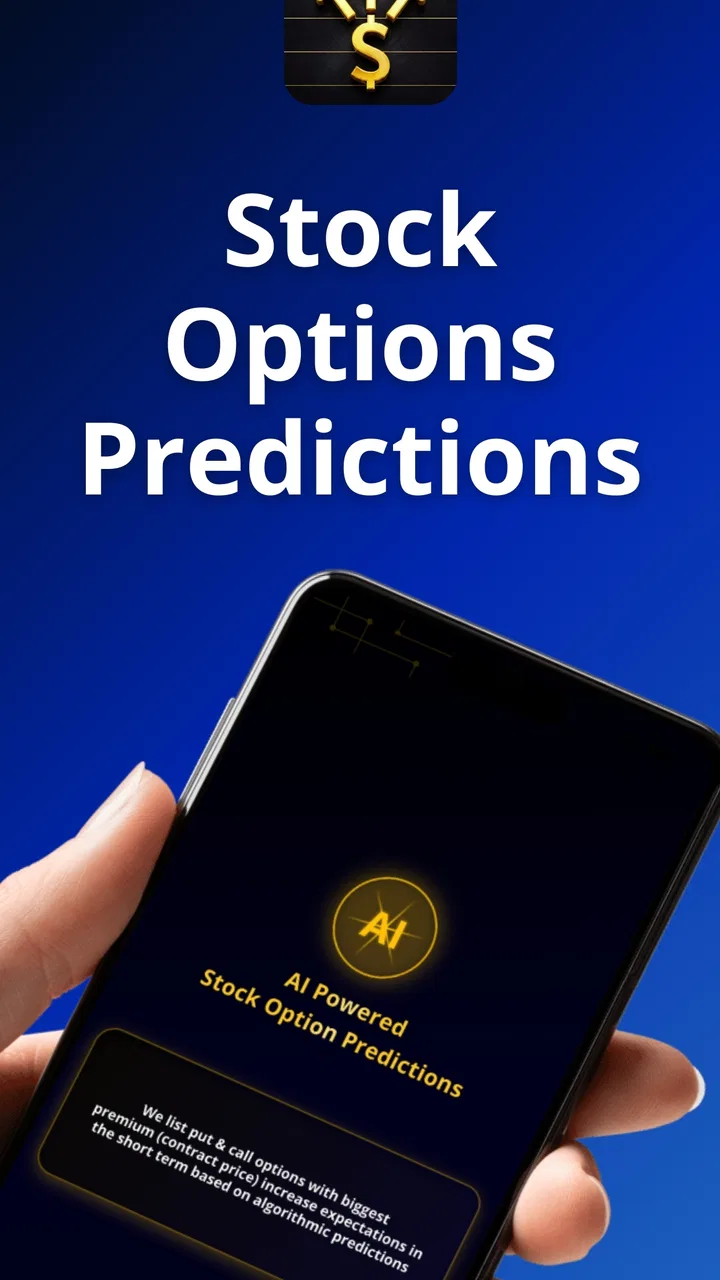
Stock Options Trading Signals is the kind of finance app that catches my attention quickly because it focuses on a difficult part of investing: finding and interpreting opportunities in American stock options markets. I tried it as a tool for research rather than as an automatic decision-maker, and that distinction matters. The app can help organize a trading routine, but it cannot remove the uncertainty, timing pressure, or risk that comes with options.
Developed by Loheden AI Solutions AB, it combines AI predictions with analysis tools in a compact mobile format. It is free to install, although in-app purchases range from around forty dollars to two hundred dollars per item, so the initial download should not be confused with unlimited access to every part of the experience. The app is rated for Everyone, and its current version is 1.3.82, with support beginning at Android 7.1.
What the first week feels like
During the first few sessions, the appeal is straightforward: I can open a finance-focused app and immediately think about possible option setups instead of beginning with a blank watchlist and several unrelated research tools. The central idea is useful for people who already understand calls, puts, expiration dates, strike prices, and the effect of volatility. For a beginner, however, an AI prediction can look more authoritative than it really is.
You May Also Like

 AccuWeather: Weather Radar
AccuWeather Review: A Quick, Clear Forecast for Everyday Decisions
For everyday plans, the best forecast is the one you can understand quickly. AccuWeather makes rain timing, radar, and local conditions easy to act on, with a few trade-offs.

 Hill Climb Racing
Why Hill Climb Racing Still Turns Crashes Into One More Run
A tiny car, a bumpy hill and one more upgrade: Hill Climb Racing keeps resurfacing because its simple chaos makes every near-miss feel personal.

 AliExpress - Shopping App
AliExpress Makes Global Shopping Feel Personal, but Shoppers Bear the Risk
AliExpress turns a global marketplace into a pocket-sized discovery engine. Its reach is useful, its shopping loop compelling, and its trade-offs easy to miss.

 Lords Mobile: Kingdom Wars
Lords Mobile Is a Kingdom-Building Routine, Not a Quick Match
A case-by-case verdict on the building, battles, device demands, and social commitments that make Lords Mobile rewarding for some players and exhausting for others.

 PDF Scanner app - TapScanner
TapScanner Makes Paperwork Easier to Capture, Check, and Share
TapScanner makes scanning with a phone feel less like a rescue operation and more like a dependable step in getting work done. Its capture tools are useful, though not flawless.

 Block Blast!
 Shows How Much a Puzzle Game Can Leave Out
A quiet grid game shows why puzzle players increasingly value instant clarity, repeatable skill and low-pressure play—and where the genre still needs to catch up.
More From Our News Desk
View All News


I would describe the app as a decision-support layer, not a replacement for a brokerage account or a complete trading education. Its purpose is to surface analysis and predictions for American markets. That makes it more relevant to someone who already follows U.S. shares and wants another viewpoint than to someone searching for basic lessons about how options work.
The first-week advantage is speed. Instead of moving between a general market-news app, a charting service, and a separate options research page, I can use this app as a focused checkpoint. I might review a company I already follow, compare the app’s signal with my own view, and then decide whether the idea deserves deeper work elsewhere. That workflow is more sensible than treating the first prediction on screen as a trade instruction.
One practical habit improved my experience: I wrote down why a signal looked interesting before checking whether I agreed with it. This prevented the app from quietly becoming the source of my entire opinion. If my original reasoning was based on earnings expectations, trend direction, or a known event, I could then ask whether the app’s analysis supported or challenged that reasoning. The disagreement was often more useful than simple confirmation.
The strongest early use is comparison, not blind execution. A prediction is only valuable when I can place it beside a clear risk limit, a time horizon, and an understanding of the option’s structure. Without those checks, the app may make a complicated position feel deceptively simple.
Who gets the most from it
This app suits an active retail trader who already has a shortlist of American companies and wants a mobile second opinion. It can also fit someone building a repeatable evening or morning review: check a few familiar names, inspect the analysis, record the reasoning, and then use a separate account or research source for final verification.
It is less suitable for a person who wants long-term retirement investing, automatic portfolio management, or a simple way to buy and hold broad funds. Those users may gain more from a traditional brokerage app with clear portfolio views and educational material. It is also not my first recommendation for a complete options beginner who does not yet know how losses, assignment, expiration, and changing volatility can affect a position.
The app’s Everyone age rating makes it broadly accessible, but accessibility should not be mistaken for financial simplicity. Options are not made safer because the interface is on a phone, and a prediction does not guarantee that a trade will work. I would keep the app away from any workflow where a user is committing money before understanding the position’s maximum loss and the conditions that could change the thesis.
A realistic everyday workflow
Imagine I have a busy weekday and only a short window after work. I could open the app, review the American stocks already on my watchlist, and note which predictions deserve attention. I would then select one or two ideas rather than scanning endlessly. For each, I would check the underlying company through a trusted market source, inspect the option’s expiration and strike, and calculate the amount I am genuinely willing to lose.
If the app points upward but the option is close to expiration, I would treat that as a warning to investigate timing rather than as encouragement to buy. A correct direction can still produce a poor result if the move arrives too late or the option’s pricing already reflects the expectation. This is one of the most important ways to use an AI signal responsibly: let it choose what to study, not what to purchase.
I would also record the date of the idea, my entry conditions, and the reason for rejecting or accepting it. That turns the app into part of a learning process. After several weeks, I could review whether the signals were useful for my style, whether I ignored them when they conflicted with my own analysis, and whether the app saved time or simply added another screen to check.
Does it keep earning attention after the novelty?
I find that an options app earns its place over time only when it helps me make a calmer, more deliberate choice—not simply when it gives me another reason to check the market. I’d judge its staying power by whether its signals fit a manageable research routine, and that also raises a separate question: how comfortably can different people read and navigate it?
Month-to-month value depends on a routine
The long-term value is not in opening the app once and receiving a clever prediction. It comes from using the analysis consistently enough to judge whether it improves my process. I would not measure success by how many signals appear. I would measure it by whether I make fewer impulsive decisions, identify research candidates faster, and understand why I passed on a trade.
That makes the app more useful as a screening companion than as a standalone investing environment. A recurring routine could be simple: review only familiar companies, save a short written thesis, compare the app’s view with independent research, and revisit the idea before taking action. Limiting the number of names is important because a constant stream of possible trades can create activity without creating quality.
There is also a valuable contrarian use. If the app’s prediction conflicts with my established view, I can use that disagreement to search for a missing assumption. Perhaps I overlooked a market event, misunderstood the timing, or placed too much weight on a recent price move. The app does not need to be right for this process to help; it only needs to prompt a better question.
On the other hand, users who expect a daily source of dependable trade ideas may become disappointed. Market conditions change, and a prediction that seemed reasonable in the morning can become less relevant after news, a price jump, or a shift in broader sentiment. The more frequently I treat the app as an authority, the more likely I am to confuse convenience with reliability.
The maintenance burden is mostly mental
The app itself is easy to fit into a routine, but options research creates work around it. I still need to understand the underlying stock, check the option contract, consider liquidity, and decide how much capital is appropriate. The app can shorten the discovery stage, yet it does not eliminate due diligence. In my experience, this is the central trade-off: less time finding ideas, but no permission to skip the difficult parts.
Paid access also deserves attention before a regular habit forms. The app is free to download, while individual in-app purchases cost from around forty dollars to two hundred dollars. I would avoid paying simply because the first week feels exciting. A better approach is to establish a paper-trading or note-taking routine first, then decide whether the additional purchase genuinely improves the work I already do.
That cost structure may be reasonable for a serious options trader who uses the app frequently, but it is harder to justify for occasional curiosity. Someone who checks markets only a few times each month may find that a general finance service, a brokerage’s built-in research, or free educational resources provide enough value. The right question is not whether a prediction sounds impressive; it is whether the paid element changes a repeatable decision process.
My maintenance checklist would be deliberately boring. I would keep the number of tracked companies manageable, avoid checking every alert or idea immediately, and review old notes rather than constantly searching for something new. I would also separate research from execution. If the app ever made me feel rushed, I would close it and return only after I could explain the trade without relying on its wording.
Where fatigue starts to appear
The first source of fatigue is signal overload. Options already offer many combinations of direction, timing, and risk. Adding frequent predictions can encourage the feeling that there is always a trade to find. That mindset is harmful for a cautious investor because waiting is a valid decision, even when an app presents an attractive-looking possibility.
The second is false precision. AI-generated analysis can sound organized and confident, but markets do not reward confidence by itself. I would be especially careful when a prediction aligns with a dramatic headline or a recent price move. The app may be useful for highlighting an idea, yet I still need to ask what would invalidate it and how much of the expected move is already reflected in the option price.
The third is repetition. If I use the app without recording outcomes, each new prediction can feel fresh even when I am repeating the same mistakes. A simple journal solves part of this problem. I would note the underlying stock, the option structure I considered, the reason for entry or rejection, and what changed afterward. This makes the app accountable to my process rather than allowing it to become entertainment.
There is also a practical limitation in comparing it with usual alternatives. A brokerage app is normally better for placing orders, viewing account balances, and managing positions. A dedicated charting or market-research platform may offer broader context. Educational services are usually better for learning terminology and risk concepts. Stock Options Trading Signals has a narrower role: it is most compelling when I want AI predictions and analysis focused on American stock options markets, not when I need one application to handle every part of investing.
Questions I would answer before installing
If you are wondering whether it replaces a broker, my answer is no. I would use it for research and idea generation, then move to the appropriate account or independent source for confirmation and execution. Keeping those roles separate reduces the chance that a convenient signal turns into an unexamined position.
If you are asking whether it is suitable for beginners, I would say only with preparation. A new trader should first learn the difference between buying an option and selling one, understand expiration risk, and know the maximum possible loss for the intended position. The app can support learning through comparison, but it should not be the teacher responsible for the entire foundation.
If you are deciding whether to pay for in-app purchases, I would wait until the free experience has earned a place in your routine. Track whether it saves research time and improves discipline over repeated sessions. If you cannot describe a specific improvement, paying more is unlikely to solve the problem.
If you are a long-term investor, the answer is more qualified. You may still use the app occasionally to explore a market view, but its focus on stock options trading signals is not naturally aligned with a simple buy-and-hold plan. A portfolio app centered on allocation, contributions, and long-term performance may be a better daily companion.
My long-term verdict
Stock Options Trading Signals earns a place on my phone only when I treat it as a disciplined research aid. Its focused purpose, AI predictions, and analysis tools make it more interesting than a generic finance app for traders who already understand American options markets. The free entry point makes experimentation easy, and the 4.3 average from over four hundred ratings suggests that many users find the concept worthwhile.
Its audience is still narrower than the install count of over ten thousand might suggest. It is not a universal investing assistant, an education-first product, or a substitute for careful contract analysis. The paid purchases can become a serious consideration, and the app’s greatest risk is behavioral: it may encourage more trades simply because new ideas are always available.
My recommendation is to give it a structured trial rather than an emotional one. Use a small watchlist, write down your reasoning, compare every prediction with independent research, and judge the app by the quality of your decisions rather than by the excitement of its signals. If it helps you filter opportunities and slow down before acting, it can provide recurring value. If it merely adds urgency, noise, or confidence without understanding, another finance tool—or no extra tool at all—would be the better choice.
For the right user, the lasting benefit is not a promise of winning trades. It is a repeatable checkpoint between market curiosity and real money. That is a modest role, but it is the role this app can serve best.
FAQs for Stock Options Trading Signals
01What is Stock Options Trading Signals, and how does it work?
Stock Options Trading Signals is a finance app designed to provide alerts and market ideas related to stock options. After reviewing the available information, users can typically browse signals based on a ticker, strategy, expiration date, strike price, or expected market direction. The app is intended to support research and decision-making, not replace personal analysis, broker tools, or professional financial advice.
02Are the stock options signals accurate, and can I rely on them to make trades?
No trading signal can guarantee a profitable result. Signals may be generated from technical indicators, market data, analyst opinions, or automated strategies, and their quality can vary depending on market volatility and timing. Before acting, users should verify the underlying stock, implied volatility, liquidity, expiration, potential loss, and overall risk. Treat every alert as research rather than a guaranteed recommendation.
03Does Stock Options Trading Signals let me place trades directly?
The app’s primary purpose is generally to display or deliver options-related signals rather than function as a complete brokerage account. Users should check the current app description and supported features because direct trading, broker integration, watchlists, or real-time alerts may depend on the version and platform. If trading is not built in, orders must be reviewed and placed separately through a compatible broker.
04Is Stock Options Trading Signals free to download and use?
The app may be available to download without an upfront charge, but some features can require a subscription, in-app purchase, or premium membership. Paid access may include additional alerts, faster notifications, historical performance data, advanced filters, or expanded coverage. Before subscribing, review the pricing page, renewal terms, trial conditions, and cancellation process through Google Play or the App Store.
05What risks should beginners understand before using this app?
Options trading involves substantially more risk than simply buying and holding shares. A contract can lose value quickly because of price movement, time decay, implied volatility, spreads, or an unfavorable expiration date. Beginners should learn how calls and puts work, understand maximum potential losses, avoid risking money they cannot afford to lose, and consider paper trading before using real capital.
Pros
- Clear buy and sell signals help users act quickly.
- Useful for monitoring options opportunities without constant chart watching.
- May support more disciplined trading decisions.
- Signals can help beginners discover potential market setups.
- Convenient access to market ideas from a mobile device.
Cons
- Signals are not guaranteed and may lead to financial losses.
- Some features or alerts may require a paid subscription.
- Timing delays can reduce the usefulness of fast-moving signals.
- Limited context may make signals difficult for beginners to evaluate.
- Options trading remains complex despite the app’s simplified guidance.

Stock Options Trading Signals
Gallery